
Origin: Early 1970’s UK
Characteristics: Distorted, riff-oriented guitar playing; often “soaring” virtuosic clean vocals; pounding, fist-pumping rhythms
Typical Live Hand Gesture: 🤘
What is the appeal?: Self-indulgent fun; badass, empowering riffs and guitar solos
In the early 1970’s, a single band famously took the distortion and attitude of hard rock and what would be called proto-metal, turned it all up to eleven, and drenched it in dark gloominess: England’s Black Sabbath, made up of bassist Geezer Butler, drummer Bill Ward, vocalist Ozzy Osbourne, and “riff master” guitarist Tony Iommi. Sabbath’s sound was unlike anything heard before, deliberately embracing a very dark sound that would later become the basis for doom metal.
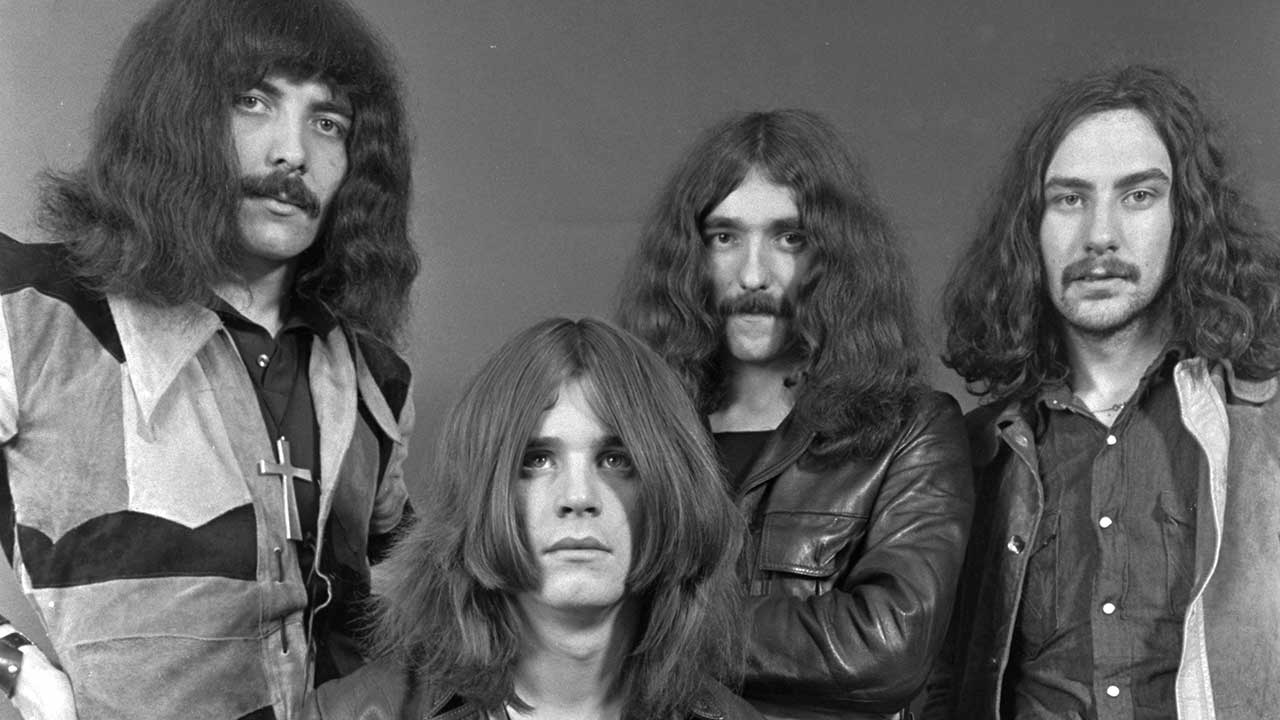
In Tony Iommi’s autobiography Iron Man, Iommi notes some key differences between Black Sabbath’s music and that of the similarly-bluesy hard rock band Led Zeppelin.
“The first time I heard Led Zeppelin’s first album I thought it was really good. Their heaviness was in (John) Bonham powering the drums. Jimmy Page played great riffs, but he didn’t have the heavy sound; his was a different sound. But it was a great combination. However, our direction was the other way around; it was the riff, the heavier sound of the guitar. Where Zeppelin relied on thundering drums, we had our massive guitar and bass wall of sound.
Iommi, p. 76
Sabbath would set the stage for a massive wave of new music that would still be going strong decades later. Along with bands such as Judas Priest and Motörhead, Sabbath preceded the famous “new wave of British heavy metal,” or NWOBHM, by several years. Priest would play a style of metal that could be seen as riffy and overdriven hard rock, featuring dual guitarists Glenn Tipton and K.K. Downing. 1976’s Sad Wings of Destiny had a somber and sincere atmosphere, and boasted virtuosic high-register singing from “Metal God” Rob Halford.
Motörhead would famously insist their music to be straight-up “rock and roll.” If they are, they’re certainly the loudest straight-up rock band on the planet! Motörhead’s music was perhaps even more overdriven than that of Judas Priest or Black Sabbath, paving the way for both the NWOBHM and the whole movement of speed and thrash metal that would follow.
The NWOBHM was one of the first scenes of metal to be unified in its identity. While some earlier metal bands such as Black Sabbath and Motörhead played something certainly heavier than hard rock, Motörhead insisted they played rock and roll, and Black Sabbath were just about the only band putting out music so heavy and doomy at the time. In the few years it took place in, the NWOBHM created a unified movement, a surge of new bands taking various influences from the genre’s predecessors, and adding their own, more melodic edge.
Despite all of the genres of metal that would be created over the years, classic heavy metal still demanded a certain respect from metal listeners. There’s something that feels downright legendary about bands such as Iron Maiden, Black Sabbath, and Judas Priest; and, these very bands would evolve their own sounds with the genre. With their respective new vocalists, Bruce Dickinson and Ronnie James Dio, Iron Maiden and Black Sabbath would take on more epic, fist-pumping, and energetic styles.
Some years later, Judas Priest would hire new drummer Scott Travis, formerly of Racer X, a shred band featuring guitar virtuoso Paul Gilbert. Travis’ double-bass drumming capabilities and Racer X’s shred sound inspired Judas Priest to take their own playing up a notch. The result was 1990’s Painkiller, Judas Priest’s fastest and most shred-filled album yet.
Though the genre would give up its spotlight, bands would continue to play classic heavy metal into modern ages. One of the most noteworthy newer bands to play this style is Sweden’s Ghost. Featuring elaborate costumes and characters, Ghost create a larger-than-life performance of a classic style.
Ghost are far from the only band carrying the torch of classic heavy metal, and a quick search into a resources such as Rate Your Music or the Metal Archives will reveal dozens of bands releasing well-received albums.
Works Cited
Iommi, Tony. Iron Man: My Journey Through Heaven & Hell with Black Sabbath. First Da Capo Press, 2011.
Reesman, Bryan. “How Judas Priest Created Painkiller at the House of Brad and Angelina 30 Years Ago.” Discogs Blog, Discogs, 3 Sept. 2020, blog.discogs.com/en/judas-priest-painkiller-30th-anniversary/.
Rivadavia, Eduardo. “The History of New Wave of British Heavy Metal.” Ultimate Classic Rock, Ultimate Classic Rock, 8 May 2015, ultimateclassicrock.com/new-wave-of-british-heavy-metal/.
 The Metal Beholder