Origin: Mid 1980’s to early 1990’s Europe, particularly Scandinavia
Characteristics: Tremolo-picked guitar riffs; blast-beat drumming; shrieked or howled vocals, usually higher in pitch than those of death metal; dark and occult lyrical and artistic themes; usually raw production quality
Typical Live Hand Gesture: 
What is the appeal?: Dark, chilling atmospheres; extreme emotional catharsis of dark, aggressive, or melancholic feelings
The darkest and most misunderstood subgenre of metal is black metal. The genre’s origins predate the extreme musical style that would come to be known as black metal; the “first wave” of black metal was a small movement of heavy, speed, and thrash metal bands with occult themes and raw production value, and the name “black metal” came from an album by English band Venom. Other bands in this proto-black metal movement included Bathory, Hellhammer (later Celtic Frost), and Mercyful Fate, all of whom contributed to the aesthetic and themes of black metal while setting the bare foundation for the musical style itself.
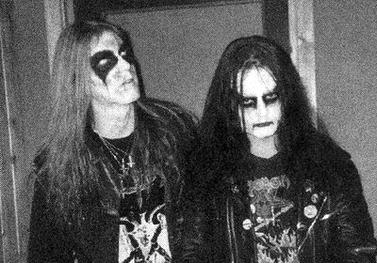
The musical style of black metal would originate with the “second wave” of black metal, centered largely in Norway and including bands such as Mayhem, Emperor, Darkthrone, and Burzum, among others. This wave of black metal was as much a musical movement as a cultural one; young artists involved in the Norwegian black metal scene would adopt an anti-Christian mentality, rebelling against the Christian culture that had invaded their homeland generations beforehand.
Musically, this second wave of black metal is where the genre would finally find its own musical identity. Defining traits of black metal came to be recognized: tremolo-picked riffs and chord progressions, and blast-beat drumming, along with the raw production values and dark, occult themes that had been used in the first wave of black metal. The second wave of black metal also saw a number of controversial events happen in Norway, including church-burnings and the murder of Mayhem’s Euronymous at the hands of Burzum’s Varg Vikernes.
The second wave of black metal would also lead to the creation of several new sub-subgenres. Emperor infused their epic black metal compositions with orchestral instruments to create symphonic black metal, invoking grandiose imagery of haunted castles at night.
Although black metal is a more passionate and emotional school of art than cerebral and progressive, a few bands would create progressive black metal anyway, most notably second-wave veterans Enslaved. Enslaved started out creating raw and aggressive black metal, true to the second-wave Norway style, but by 2000’s Mardraum: Beyond the Within, they had incorporated a number of progressive influences in their music. By 2012’s RIITIIR, they would be soundly categorized as a progressive metal band, utilizing mellotrons and a larger variety of timbres.
While bands like Emperor and Enslaved created elaborate, grandiose styles of black metal, their contemporary Burzum took a completely different approach, particularly on the albums Hvis Lyset Tar Oss and Filosofem. Burzum’s infamous Varg Vikernes wrote a minimalist style of black metal, with droning, repetitive riffs, ambient synthesizers, and an absolutely bleak, harrowing atmosphere. This style would be known as atmospheric black metal, carving a distinctive niche in the metal underground.
Atmospheric black metal would prove to be a surprisingly versatile genre. While Burzum conjured imagery of solitude and bleak, wistful landscapes, Austria’s Summoning have a pure fantasy theme, akin to Lord of the Rings or Warcraft, and a number of artists produce what could be called cosmic black metal, with artists such as Darkspace and Mare Cognitum invoking the grand, majestic imagery of outer space itself.
Decades after Burzum essentially defined atmospheric black metal, a number of bands from Europe and, surprisingly, the American west coast would take the genre farther still, adapting the crescendo and layer-based songwriting style of post-rock to modernized black metal to create what would be widely known as post-black metal. Attracting a new, younger audience, post-black metal would be nicknamed “hipster black metal” and would also introduce many of those fans to the older atmospheric black metal that inspired this new wave.
One of the most aggressive subgenres of metal overall would be a fusion of black and death metal, known simply as blackened death metal. Bands like Behemoth, Akercocke, and newer bands such as Black Curse and Esoctrilihum would combine the aggression, riffing, and production value of death metal with the blast beats, tremolo-picked riffs, and infernal, evil atmosphere of black metal, to create some of the most radical and occult metal known yet.
As black metal is one of the most emotional and cathartic subgenres of metal, a number of artists would use the style as a basis of experimentation in their music. Norway’s Arcturus created left-field black metal, strangely combining spacey timbres with a “haunted carnival” vibe. Some years later, Hungarian/Scottish artist Thy Catafalque would combine aspects of black and doom metal with electronic instrumentation and a sense of melody inspired by traditional Hungarian music, creating a unique style of avant-garde metal.
Black metal is one of the deepest niches of metal to explore, between the various subgenres and the impressive level of activity in the present day. Bands like Mgla continue to produce bleak and nihilistic black metal, while Enslaved are deep into progressive territory, and a number of underground bands perform aggressive and infernal blackened death metal. Bands like Deafheaven even show that a subgenre of black metal can obtain mainstream recognition, as they did with 2013’s Sunbather, an uplifting, shoegaze-influenced “blackgaze” album that got the Californian group noticed by publications such as Pitchfork.
Works Cited
Sholihyn, Ilyas. “Shades Of Black: The History and Evolution of Black Metal.” Medium, Social Club, 26 Nov. 2017, medium.com/social-club/shades-of-black-the-history-and-evolution-of-black-metal-ef916e8e35b7.
 The Metal Beholder